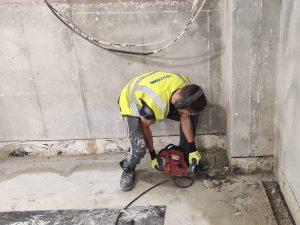
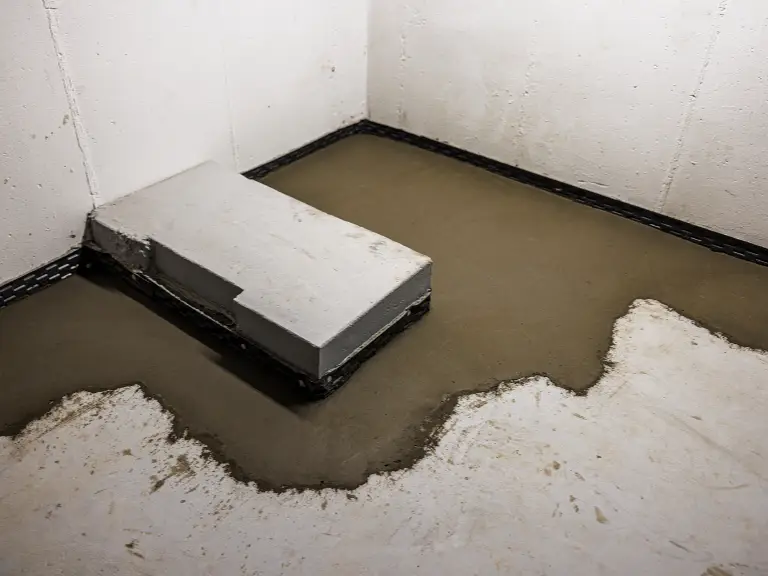
Basements and cellars are more exposed to damp and mould than other parts of a property because they sit below ground level and remain in constant contact with surrounding soil. Basement waterproofing works by managing how groundwater and moisture move around and through below-ground structures.
Professionally designed systems control water ingress and internal humidity in a predictable way, reducing the conditions that allow damp and mould to develop.
Why Basements Are Vulnerable to Damp & Mould
Basements are considered high-risk environments for damp because they are built partly or wholly below ground level and remain in constant contact with surrounding soil. Groundwater, surface water, and seasonal rainfall apply sustained pressure to basement walls and floors, increasing the likelihood of moisture entering the structure where protection is inadequate.
BS 8102:2022 recognises that traditional masonry materials such as brickwork, stone, and mortar are inherently permeable [1]. When exposed to ongoing external moisture, water can migrate through walls and floors unless a carefully designed waterproofing system is in place.
The standard also emphasises the importance of risk assessment for below-ground structures. Local groundwater conditions, soil characteristics, and the intended use of the basement influence the level of protection required and help determine whether moisture should be resisted, managed, or actively removed.
Key factors contributing to basement damp and mould include:
- Continuous groundwater and surface water pressure
- Permeable masonry construction materials
- Ground levels higher than the internal floor height
- Cool internal surfaces that encourage condensation
- Limited natural ventilation and airflow
BS 8102 confirms that effective moisture control in basements requires a planned waterproofing strategy that addresses external water sources and groundwater conditions, rather than relying solely on surface treatments.
How Basement Waterproofing Controls Moisture at Source
Waterproofing systems typically fall into three functional categories. Each approach manages moisture differently, and the correct solution is selected following a structured risk assessment.
- Barrier protection uses applied materials to resist moisture penetration through walls and floors.
- Drained protection allows water to enter in a controlled way before directing it to a safe discharge point.
- Active groundwater control removes collected water to prevent pressure from building up around the structure.
In practice, systems are often combined to provide reliable protection. This ensures moisture is managed rather than trapped, reducing stress on the structure and limiting the risk of long-term failure.
The Main Waterproofing Systems Used in UK Basements
The most commonly specified basement waterproofing systems in the UK are cementitious tanking, cavity drain membranes, and sump pump installations. Each system manages moisture differently and is suited to specific ground conditions, structural characteristics, and performance requirements.
Cementitious Tanking for Solid Masonry Basements
Cementitious tanking forms a continuous waterproof barrier applied to internal walls and floors. It is typically used in structurally sound masonry basements where internal space is limited, and groundwater pressure can be reliably managed.
Correct surface preparation and detailing are essential. Tanking systems rely on substrate integrity and are less suitable where ongoing structural movement or fluctuating groundwater pressure is expected.
Cavity Drain Membranes for Managed Moisture Control
Cavity drain membrane systems manage moisture by creating a controlled drainage space behind internal finishes. Water entering the structure is directed into drainage channels and routed to a suitable discharge point, such as a drain or sump.
This approach is commonly used in situations where basements are intended for regular use, as it keeps internal surfaces dry while allowing moisture to be managed rather than resisted.
Sump Pump Systems for High Groundwater Conditions
Sump pump systems remove collected water from the lowest point of a basement drainage system. Pumps activate automatically when water reaches a set level and discharge it away from the structure to reduce groundwater pressure.
They are typically specified where groundwater levels are high or water ingress is persistent. Battery backup systems are often included to maintain operation during a power interruption.
How Waterproofing Helps Prevent Mould Growth
Mould growth in basements is linked to prolonged exposure to excess moisture rather than surface contamination alone. UK government guidance identifies damp and mould as housing quality issues due to their association with respiratory and health risks.
Basement waterproofing helps reduce mould risk by controlling moisture at a structural level. Limiting groundwater ingress and persistent damp within walls and floors reduces internal humidity and the conditions that support mould growth.
Government estimates indicate that between 4% and 27% of homes in England, equivalent to around 962,000 to 6.5 million households, are affected by damp and mould [2]. Managing moisture at the source is therefore a critical step in reducing long-term exposure risk, particularly in below-ground spaces.
The Role of Ventilation & System Design
Ventilation supports basement waterproofing by helping to manage moisture generated internally through normal use. Improved airflow reduces condensation risk by allowing humid air to disperse before it settles on cooler basement surfaces.
Ventilation alone does not prevent damp where groundwater or penetrating moisture is present. It is most effective when used alongside a waterproofing system that controls moisture at source.
In basement waterproofing projects, waterproofing measures must be integrated with:
- Drainage routes
- Structural elements
- Internal finishes
Poor sequencing can compromise system performance, even where materials are correctly specified, increasing the risk of long-term failure.
Get Clear Advice on Basement Waterproofing for Your Property
Basement waterproofing is most effective when treated as a long-term measure to control moisture in below-ground spaces. A correctly specified system is designed to perform over time, supporting the condition, usability, and overall resilience of basements and cellars.
Prokil provides professional inspections and survey-led system design to address groundwater ingress, damp conditions, and moisture-related risk. Recommendations are based on site conditions and intended use, with solutions aligned to recognised best practice for below-ground structures.
Call 0800 048 9488 or arrange an inspection to assess the cause of damp in your basement or cellar.
External Sources
[1] British Standard, “BS 8102:2022”: https://knowledge.bsigroup.com/products/protection-of-below-ground-structures-against-water-ingress-code-of-practice
[2] GOV.UK, “between 4% and 27% of homes in England, equivalent to around 962,000 to 6.5 million households, are affected by damp and mould”: https://www.gov.uk/government/publications/damp-and-mould-understanding-and-addressing-the-health-risks-for-rented-housing-providers/understanding-and-addressing-the-health-risks-of-damp-and-mould-in-the-home–2