

Book Survey
Case Studies
Damp and Timber Specialists for 50 years

What is Dry Rot Treatment?

Dry rot is a severe form of timber decay caused by the wood-destroying fungus Serpula lacrymans. It thrives in damp, poorly ventilated areas and can spread through masonry, behind plaster, and across floor and roof voids. Over time, it weakens key structural timbers.

Dry rot treatment involves identifying the fungus, locating and removing its moisture source, cutting out all affected timbers, and applying specialist fungicidal treatments to prevent further spread. As dry rot often hides out of sight, specialist surveys and testing are needed to trace its path through hidden voids and ensure no affected areas are left untreated.

Prokil provides expert dry rot surveys and treatments for homes and businesses across the South of England. We combine moisture diagnostics, laboratory-backed identification where required, and industry-approved treatment methods tailored to your property’s construction. This joined-up approach ensures every affected area is addressed, from hidden voids to visible surfaces.

Why Choose Prokil for Dry Rot Treatment?

  • Over 50 years of experience in timber decay and preservation
  • Property Care Association (PCA) and TrustMark accredited
  • CSRT and CSSW-qualified surveyors on every job
  • Detailed, evidence-backed reports with expert guidance
  • Comprehensive treatments and preventative measures
  • Covered by the Prokil Guarantee (up to 20 years, where applicable)
Why You Cannot Ignore Dry Rot in Your Property

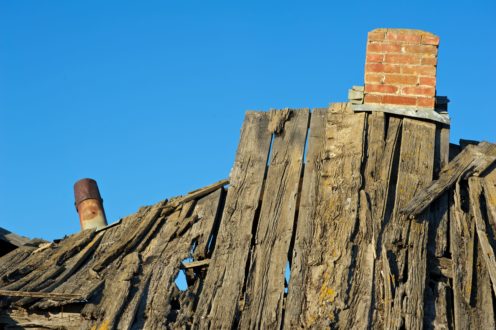
Dry rot is the most aggressive form of fungal decay affecting internal timbers. Unlike other types of rot, it can travel through masonry, grow behind plaster, and spread rapidly across a building in search of moisture. Without treatment, dry rot will continue to weaken structural timbers, leading to severe and costly failures.

Dry rot often extends beyond what you can see, so the repair plan needs to cover every affected area. Thorough remedial work helps prevent repeat problems, reduces future repair costs, and avoids the disruption of having to reopen finished areas later.

A thorough inspection is also vital because the presence of dry rot usually indicates an underlying moisture problem, such as:

  • Penetrating damp
  • Defective gutters
  • Blocked drains
  • Leaking pipework
  • Roof leaks

Dry rot treatment should only be carried out by trained specialists. Prokil surveyors follow current industry codes of practice. We also provide clear, written recommendations you can share with insurers, mortgage lenders, or other contractors. Our role is to guide you through the options and make sure every stage of the work is carried out safely and transparently.

How to Spot Dry Rot Before It Causes Serious Damage

Dry rot can spread a long way before the damage becomes obvious. Often the first signs are subtle, such as hairline cracks in wood or tiny dust-like spores. Yet, the main outbreak is hidden in places like floor voids, behind plaster, or under skirting boards. Early detection makes treatment simpler and less disruptive, so it is worth arranging a professional survey as soon as you notice anything unusual.

Prokil surveyors usually begin with a non-intrusive inspection to identify tell-tale signs of dry rot and any likely moisture sources. If we need to look behind finishes, our team will explain what is involved, agree on any intrusive checks in advance, and keep disruption as low as possible while we confirm exactly how far the fungus has spread.

Look out for the following symptoms of dry rot:

  • Timber that appears shrunken or brittle, especially behind painted surfaces
  • Cuboid or “blocky” cracking along the grain of the wood
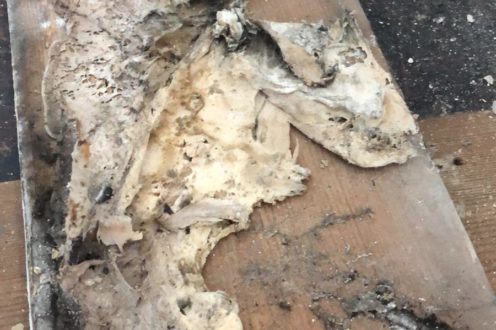
  • A cotton wool-like mycelium growth on or around the timber
  • Strands spreading out from affected areas in search of moisture
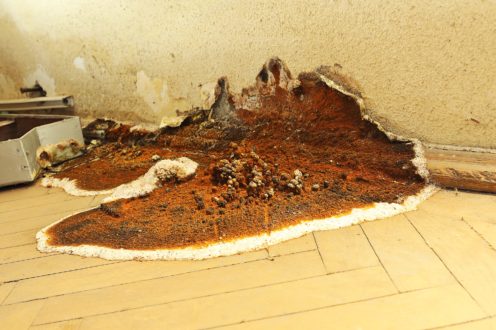
  • Rusty orange, pancake-like fruiting bodies with paler edges

If you notice any of these signs, your local Prokil team can confirm the problem and recommend the proper dry rot treatment for your property.

What to Expect from Prokil’s Dry Rot Treatment Programme

Dry rot treatment is like wet rot treatment, but outbreaks often demand more extensive investigation and monitoring. To stop dry rot, we first remove all moisture sources, such as leaks, poor drainage, or inadequate ventilation, then use controlled heating and drying alongside a complete treatment programme to prevent it from spreading.

A typical Prokil dry rot treatment programme includes:

  1. Identifying and repairing moisture sources such as leaks, penetrating damp, defective gutters, or poor ventilation.
  2. Monitoring moisture levels and, where needed, implementing a controlled drying regime so the surrounding environment is no longer suitable for dry rot to grow.
  3. Carefully cutting out and removing decayed timber and, where necessary, contaminated plaster, debris, or subfloor material in line with safety guidelines.
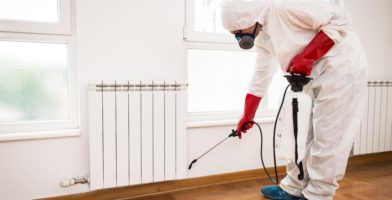
  4. Cleaning and treating surrounding masonry, timber, and subfloor earth with professional fungicidal products, sometimes in more than one application.
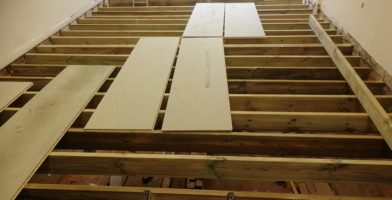
  5. Installing replacement pre-treated timbers that comply with BS 8417:2011, ensuring all cut ends are treated and kept separate from damp masonry.

All dry rot treatments are carried out by fully trained technicians and overseen by qualified Prokil surveyors. Our goal is to eradicate the fungus, leave your property dry and safe to occupy, and give you clear documentation and guidance so you can feel confident the dry rot problem has been properly resolved.


Book a survey today

  • This field is for validation purposes and should be left unchanged.

What to expect from your survey

1

Book a survey

Book a survey from any of our locations, at a time that suits you.

2

Our experts give a quote

One of our damp & timber experts will arrive to survey the work.

3

We complete the work

Based on a quote, we carry out the work guaranteed for 20 years.