
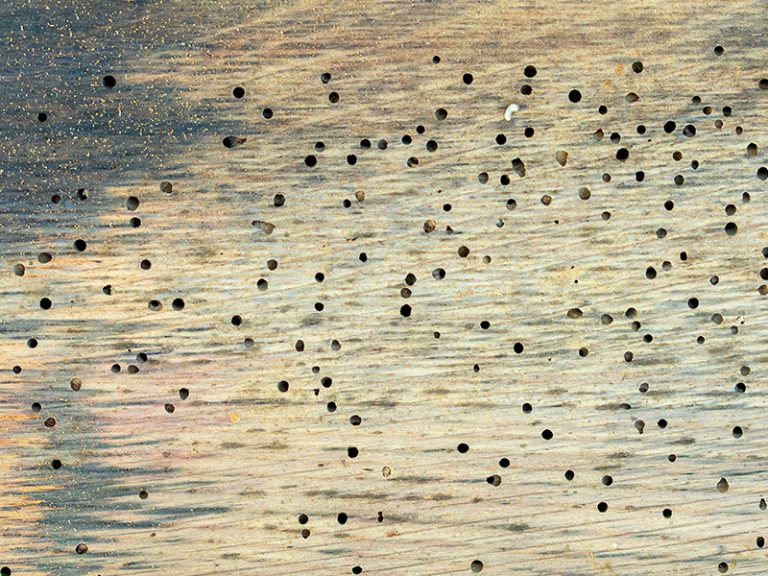
For commercial property managers and landlords the structural integrity of a building is critical and can become a legal liability if defects are left unaddressed. While many property issues are weather-dependent, one of the most significant threats to British commercial architecture remains largely undetected until it reaches a point of crisis, which is an active woodworm infestation.
As we move through the British summer, rising temperatures and specific humidity levels act as a biological trigger for wood-boring beetles. This period, known as the emergence window, is the most active phase of the woodworm lifecycle. To protect your property’s value and ensure the safety of your occupants, it is essential to move from reactive repairs to a strategy of proactive preservation.
How to Spot an Active Infestation
In a commercial environment, identifying woodworm early can mean the difference between a targeted timber preservation treatment and a costly, disruptive structural replacement.
Many older commercial buildings in the UK have historic woodworm holes. The key for a property manager is identifying active threats.
- Active Indicators: Sharp-edged, circular holes that look bright or like new wood inside. You will often find fine, cream coloured wood dust accumulated around or directly beneath these holes.
- Historic Indicators: Dark, dusty holes that have been painted or varnished over. While these indicate past damage, they should still be monitored during the July window for any breakthroughs.
If an infestation has been left unchecked, the internal burrowing of tunnels can compromise the load-bearing capacity of your timbers.
- Deflection: Sagging in floorboards or visible bowing in ceiling joists.
- Crumbled Edges: If the corners of beams or floorboards appear to be “shedding” wood or feel soft to the touch, the structural integrity is at critical risk.
Spotted an Infestation?
If you have identified fresh exit holes or “frass” (that tell-tale fine sawdust) in your premises, the clock is ticking. Here is the professional protocol for managing the risk:
- Isolate and Audit. Don’t move affected pallets, furniture or organic stock to other parts of the building, as this can spread the infestation. Contact a timber specialist surveyor immediately to determine if the activity is localised or indicative of a wider structural issue.
- Evaluate the Environment. Woodworm thrives in timber with a moisture content of over 12%. A professional survey won’t just look at the holes; it will identify the damp source, whether it’s a leaking pipe, poor ventilation, or rising damp that made your timber an attractive target in the first place.
- Implement 360° Remediation Once the infestation is mapped, the timber is treated with targeted insecticidal sprays to break the lifecycle. However, for a business, the job isn’t finished until the environment is restored. This is where our Air Purification add-on comes in, scrubbing the air of dust and spores disturbed.
Business Risk Assessment & Action Plan
| Observation | Risk Category | Business Implications | Strategic Action |
| Scattered bright holes + Fresh frass | High/Active | Risk of spread to other structural timbers and organic inventory. | Request a B2B Timber Survey and targeted preservation. |
| Soft timber or sagging floors | Critical | Immediate safety hazard; potential breach of duty of care. | Emergency structural repair and reinforcement. |
| Dead beetles on sills/near light | Moderate/High | Confirms an active “hatch” is occurring within the premises. | Audit all nearby timbers and treat -improve ventilation. |
| Musty Odours + Damp staining | Compound Risk | High probability of Dry or Wet Rot co-existing with woodworm. | Full damp and timber audit with air purification. |
The Business Impact
Ignoring woodworm in a commercial setting shouldn’t be another maintenance delay, as it can be a gamble with your business’s bottom line. Left unchecked, wood-boring larvae can reduce heavy load-bearing joists to a honeycombed shell. In a warehouse or retail environment this could lead to major floor failure and potential injury to staff or the public.
An active woodworm infestation must be disclosed during property surveys. If you are looking to sell, lease, or refinance your commercial asset, an untreated infestation can cause the deal to collapse or lead to a significant retention of funds. Plus, woodworm doesn’t always stay in the one place. They can move into organic stock, wooden packaging and even expensive office furniture, leading to direct stock loss.
Under the Health and Safety at Work Act, employers have a duty to provide a safe working environment. Knowingly allowing a building’s structure to degrade is a breach of that duty. Remember – in summer, a small cluster of holes is a manageable repair. By winter it’s a structural emergency.
Prokil Property Care
At Prokil, we understand that B2B clients require more than just a chemical spray. You require a solution that minimises downtime and ensures the health and safety of your workforce.
Our qualified CSRT/CSTDB surveyors provide a comprehensive assessment of the infestation’s extent. We utilise targeted insecticidal treatments designed to break the lifecycle of the beetle, preventing further egg-laying and protecting your asset for years to come.
The Sterile Environment Add-on: HEPA Air Sterilisation
One of the most significant challenges in commercial timber treatment is the disturbance of dust, debris and invisible fungal spores that have accumulated over decades. Traditional treatments can compromise indoor air quality, which is a major concern for office and retail environments.
- Particle Capture: Our units remove 99.97% of airborne particles as small as 0.3 microns, including the dust and chemical particulates stirred up during work
- UV-C Technology: We utilise a “DNA kill-switch” (UV-C light) to sterilise airborne spores, ensuring they are not just trapped but unable to reproduce.
- Odour Neutralisation: Our activated carbon filters eliminate the “musty” smell associated with timber decay, leaving your space professional and fresh.
Use the Summer Window Wisely
Summer is the ideal time for property maintenance. The dry weather ensures that timber treatments are absorbed more effectively and the active nature of the July hatch allows our experts to identify and neutralise the threat at its peak.
Don’t wait for winter moisture to exacerbate structural damage. Take the final step in professional property care today.