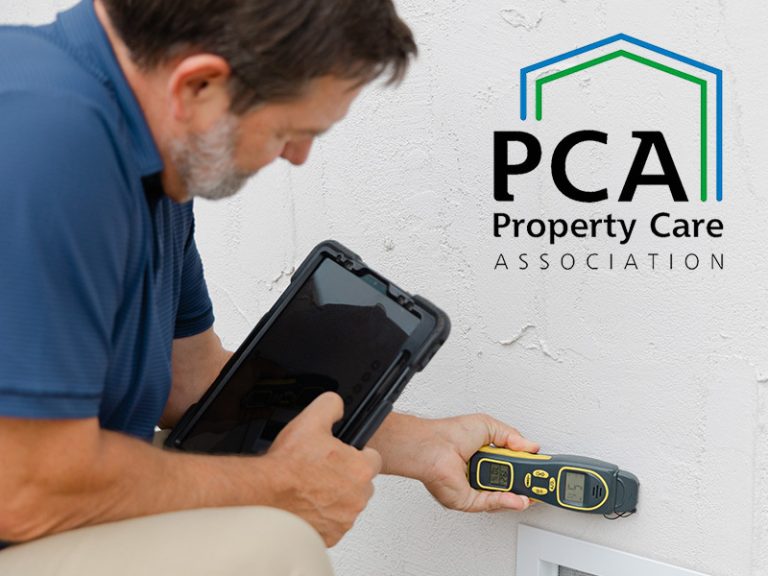
The answer isn’t simply that free surveys are bad and paid surveys are good. Both can be useful, depending on what you need. However, before committing to potentially thousands of pounds in remedial work, it’s important to understand who is carrying out the survey, what qualifications they hold and what their assessment will tell you about the cause of the problem.
One important consideration is whether the company belongs to the Property Care Association (PCA) and whether the surveyor holds relevant professional qualifications. PCA membership provides homeowners with a way to identify businesses operating within a recognised industry framework. However, membership, individual qualifications and the scope of a particular survey are separate considerations, so it’s worth checking each. Ultimately, the question isn’t simply whether a survey is free or paid. It’s whether the assessment provides the information you need to make an informed decision about your property.
- A free survey is often part of a contractor’s process for assessing the problem and preparing a quotation.
- A paid damp survey is typically a professional diagnostic service, where you are paying for the investigation and the information it provides.
The important question is not “Is the survey free?” It’s “Will the survey give me the information I need to make the right decision?”
Why do some companies offer free damp surveys?
There is a simple commercial reason. A company carrying out damp-proofing or remedial work needs to inspect a property before it can recommend and price the work. Some companies therefore provide the initial survey free as part of the process of winning the work. There is nothing inherently wrong with this. In fact, some companies offering free surveys provide a useful service. However, it is worth understanding the difference between inspecting your property and giving you a quotation versus carrying out a detailed investigation and providing you with a professional diagnostic report.
What Is PCA Accreditation, and Why Does It Matter?
The Property Care Association (PCA) is a trade association for businesses working in areas including damp control, timber preservation and structural waterproofing. Its membership framework provides homeowners with a way to identify companies associated with recognised professional standards and relevant industry competencies. For homeowners arranging a damp survey, checking PCA membership and the surveyor’s qualifications can be a useful part of choosing a specialist. Relevant qualifications in the damp and timber sector include:
- CSTDB (Certificated Surveyor of Timber and Dampness in Buildings): a qualification focused on surveying timber and dampness in buildings.
When choosing a surveyor, it’s worth checking which qualifications they hold and whether these are appropriate to the type of investigation your property requires. You can use the PCA’s Find a Specialist directory to look for member companies and check their listed areas of work.
PCA membership should not, however, be treated as an automatic guarantee that every diagnosis will be correct. Nor does the absence of membership necessarily mean a company lacks competent surveyors. Qualifications, experience, the quality of the investigation and the evidence supporting the diagnosis all matter. It’s also important to distinguish company membership from an individual surveyor’s qualifications. Check both rather than assuming that one automatically establishes the other.
The Important Question About Damp Surveys
Damp can have many causes, including rising damp, penetrating damp, condensation, plumbing defects, damaged gutters, poor ventilation, high external ground levels and defects to the building fabric. A moisture reading on its own doesn’t tell you which of these is responsible.
A professional investigation should therefore consider the property as a whole and look at the evidence before recommending treatment. Depending on the survey, this can include internal and external inspection, moisture readings, examination of affected areas, consideration of ventilation and condensation, assessment of external defects and a written explanation of the findings. That’s what you’re paying for: the investigation and professional opinion, not simply a quotation.
Before Accepting a Free Damp Survey, ask These 5 Questions:
If a company offers you a free survey, there is no reason not to ask questions
- What do you believe is causing the damp? Ask for a clear explanation rather than just a name for the treatment.
- What other causes have you considered? For example, has the surveyor considered condensation, penetrating damp, plumbing or external defects?
- What evidence supports your diagnosis? A good surveyor should be able to explain what they have found.
- Will I receive a written report? A quotation tells you what the company wants to charge. A diagnostic report should explain what has been found and why the recommended solution is appropriate.
- Would you tell me if I don’t need remedial work? This may be the most revealing question of all. If the cause turns out to be a leaking gutter, inadequate ventilation or another issue that doesn’t require specialist damp treatment, will the surveyor tell you?
Paid Damp Surveys
A paid survey isn’t automatically more accurate because you have paid for it. The difference is what the service is intended to provide. If you only want a contractor to visit, assess the problem and provide a quotation, a free survey may be perfectly adequate. But if you are concerned about an expensive diagnosis, want a detailed written assessment, need a second opinion or simply want to understand the cause before deciding what to do, a paid professional survey can be a worthwhile investment. Consider it in the context of the potential cost of the work. If you’re about to spend £2,000, £5,000 or more on remedial work, spending money first to establish whether that work is actually necessary can be a sensible decision.
Why choose a Prokil Damp Survey?
At Prokil, we believe the diagnosis should come before the treatment. Our specialist surveyors assess the property to establish the likely cause of the problem before recommending appropriate remedial work. Prokil provides damp and timber surveys covering issues including rising damp, penetrating damp, condensation and timber problems. The survey is a professional service, rather than simply a free route to a quotation. That means you are paying for the time, expertise and investigation involved in assessing the problem and reporting the findings. And sometimes the right answer isn’t an expensive damp treatment. If the evidence points towards condensation, a building defect or another cause, that’s what the survey should tell you. The purpose of a good damp survey isn’t to sell you a treatment. It’s to help you understand the problem.
Free or paid: which should you choose?
If you want a quick initial assessment and quotation, a free contractor survey may be suitable. If you want a detailed professional investigation before committing to remedial work, a paid survey may be the better option. The key is to compare what you’re getting, rather than comparing a free survey with the cost of a professional survey. The cheapest survey isn’t necessarily the cheapest way to solve a damp problem. If you’re unsure what’s causing damp in your property, Prokil can arrange a professional damp survey with one of its specialist surveyors.