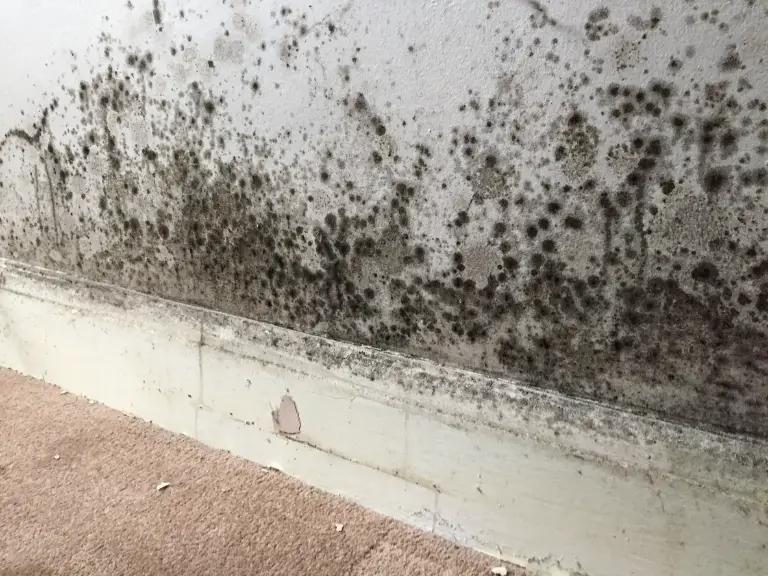
Instead of achieving enhanced energy-efficient homes and lower energy costs, 98% of homes that had external wall insulation work will face damp and mould hazards if no remedial work is done. The National Audit Office (NAO) reports that defects remained hidden due to:
- Inconsistent and poor installation standards on-site
- Weak quality control and regulatory oversight
- Rapid scheme rollouts prioritising volume over quality
Some affected UK homeowners are now uncovering serious faults behind their recently insulated walls, leading to serious damp and mould risks. This issue has had a big impact on vulnerable residents supported under government schemes. Moisture now sits trapped behind insulation. This has prompted unexpected mould growth, ventilation problems and damaged plasterwork.
Furthermore, thousands of households remain unaware that their newly installed insulation is faulty. Structural or health risks from damp and mould are unfortunately concealed behind the new walls, and problem only comes to light after it is too late to prevent.
We look at how poor-quality workmanship and weak oversight led to this damp and mould scandal, and how you can protect your home from these health risks. To act now and protect your property, book a professional Damp Survey with Prokil.
The Evidence Behind the 98% Failure Rate
The NAO found that most homes with external wall insulation installed under the Energy Company Obligation 4 (ECO4) and the Great British Insulation Scheme (GBIS) now require corrective work. The final NAO summary found that 98% of the installations reviewed had significant issues. This included rainwater infiltration, a bundling of claims, and safety hazards.
Key findings:
- Installation defects included missing fixings, unsealed gaps and incompatible render systems.
- The Office of Gas and Electricity Markets (Ofgem) identified inaccuracies in claims made by installers.
- The Department for Energy Security & Net Zero (DESNZ) only recognised quality issues in late 2024, despite the consumer protection framework launching in 2021.
These failures enabled the completion of poor-quality installations at scale. Rainwater then entered behind insulation panels and remained trapped. This accelerated the effects of damp, mould, and structural damage.
How Installation Errors and Weak Oversight Fuelled the Crisis
External wall insulation failed in many homes due to a combination of technical mistakes and weak oversight. Installers often worked to tight deadlines with inconsistent training and variable on-site checks.
The NAO report on the Energy Company Obligation (ECO) revealed that most homes did not comply with external wall insulation rules under ECO4 and the GBIS. In fact, 98% of the audited homes had significant issues.
Common problems included:
- Insulation boards fixed incorrectly or with missing fixings
- Gaps left unsealed around openings and junctions
- Render systems not matched to the underlying structure
- Ventilation openings blocked or bridged during installation
Regulatory checks also fell short. Ofgem has shared information on how to complain about ECO installations. If there are poor workmanship or non-compliant installs, you can report them. They also noted that some installers made false claims about completed work.
How Faulty Insulation Traps Moisture & Creates Damp and Mould
External wall insulation is designed to keep warmth inside while shedding rainwater at the surface. Yet, when systems are installed poorly, the opposite can happen. Water seeps in behind the insulation and cannot escape. This results in high moisture levels in the masonry and plaster.
Typical signs include:
- Discolouration or tide marks on internal walls
- Peeling or bubbling paintwork and soft plaster
- New mould patches, especially in corners and cold spots
- A persistent musty smell even after cleaning
Over time, this trapped moisture can promote mould growth and contribute to structural decay. Government guidance on damp and mould stresses that these issues can worsen respiratory problems. They need prompt treatment, not just blame for “lifestyle” choices.
Internal wall insulation can create similar issues. For example, if lightweight materials are used without proper vapour control or if existing damp paths are ignored.
Which Homes Are Most Likely to Have Insulation-Related Damp
Properties most at risk from external wall insulation problems are those upgraded under the ECO4 and GBIS between 2022 and 2025. The typical targets of these schemes were vulnerable households. For example, those with older solid-wall buildings and homes with previously poor insulation.
Key indicators that your home may be affected include:
- A record of external wall insulation installed since April 2022 via a grant scheme.
- New mould patches, peeling or bubbling paint, or plaster softening on walls that were insulated.
- Cold or damp-feeling areas on previously insulated walls, particularly near corners or junctions.
- Solid-wall construction (no cavity) or a complex external design with bay windows, eaves, and render over brickwork.
If you’re not sure whether your property was part of a government-backed installation:
- Review any paperwork from the installer or letters from your energy supplier or DESNZ.
- Ask the installing company for the scheme reference number (ECO4/GBIS) and the inspection certificate.
- If documentation is missing, get an independent survey from a qualified damp or moisture specialist.
What To Do Now If You Suspect Insulation Problems
If you suspect your home has been affected by external wall insulation problems, you should take the following steps:
- Document the Issue: Take photographs of affected walls. Keep track of when symptoms started and save any emails about the insulation installation.
- Check the Installation Details: Verify whether the work was done under ECO4 or GBIS. Look for installer certification, scheme reference numbers and request evidence of inspection.
- Hire a Professional Assessor: A skilled damp surveyor can use moisture meters, thermal imaging, or salt analysis. They can determine if moisture is trapped behind the insulation or if there’s another issue.
Has non-compliant insulation been discovered? Government guidance makes clear that the original installer remains liable for corrective work.
How to Protect Your Home from Long-Term Moisture Damage
External wall insulation problems have left many UK homes vulnerable to hidden moisture, mould, and structural risks. A professional damp survey is now one of the most reliable ways to understand whether your property has been affected.
Prokil provides specialist damp and mould surveys across the UK. The work is done by PCA-accredited surveyors who have over 50 years of experience in structural moisture inspection. Each survey provides you with evidence that you can use with insurers, contractors, or scheme administrators.
Call 0800 048 9488 or arrange an inspection to protect the long-term health of your home.