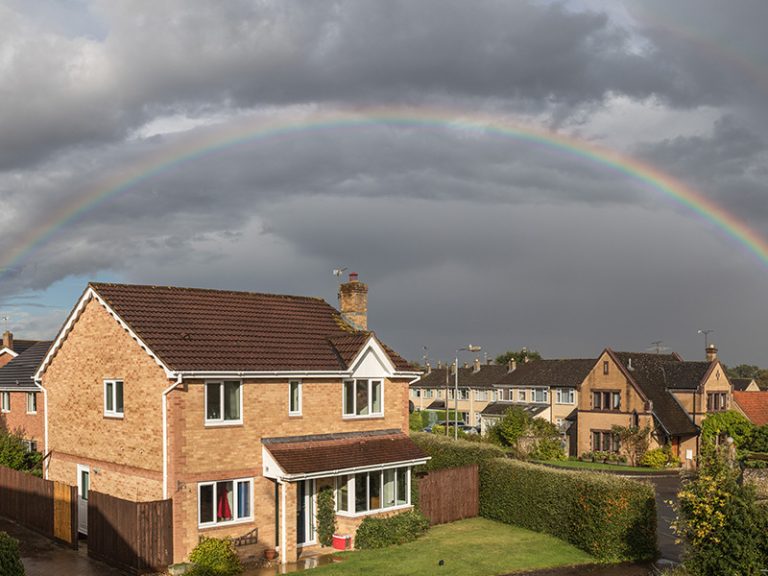
For commercial property managers, institutional landlords and loss adjusters, summer is traditionally viewed as a quiet period for maintenance. However, July introduces a risk: prolonged dry spells punctuated by sudden, rain showers that can cause damage, longterm problems and high associated financial repercussions.
[Summer Storm Leak] + [July Heatwave] = Rapid Timber Decay & Mould
High ambient summer temperatures turn trapped indoor moisture into a high-humidity incubator. Within days, this environment triggers rapid biological degradation, accelerated timber rot and toxic black mould outbreaks. Dealing with this quickly is a race against the clock. Delaying specialist checks can ruin the building structure, disrupt businesses, cause tenant arguments and even lead insurers to reject the claim because action wasn’t taken fast enough.
Treating Summer Storm Ingress
When assessing commercial insurance claims, dampness manifests in various forms, each requiring distinct diagnostic pathways and specific remediation techniques. For B2B clients, identifying the exact type of damage affecting an asset is crucial for aligning the damage with the correct insurance policy clauses.
Penetrating Damp And The Vacant Property Problem
Penetrating damp during July’s rainstorms occurs when water enters through a building’s envelope. Prolonged dry spells can cause external masonry to develop microscopic thermal cracks. When a sudden shower hits, these cracks can allow moisture to penetrate the structure, potentially damaging internal plasterboard and finishes. While storm damage is usually covered by insurance, insurers will reject claims if the leak was caused by blocked gutters or poorly maintained brickwork.
July is a common time for properties to change hands, leaving schools, student housing and retail shops empty. With the heating, ventilation and cooling systems turned off there is no airflow. High humidity outside, combined with heat from the sun, causes trapped moisture to collect on cold basement walls, concrete floors and steel beams, quickly causing severe mould outbreaks.
How Prokil Fixes Commercial Damp
When Prokil is instructed by a commercial landlord or loss adjuster to address insurance-related damp issues, we deploy a multi-stage, high-specification treatment framework:
- Advanced Diagnostic Surveying: Utilising non-destructive testing to map the exact moisture profile of the building fabric, separating acute storm-driven penetrating damp from chronic underlying issues.
- Damp Proof Course Installation: Where the original barrier has failed or been bridged, we introduce specialised systems, injecting high-concentration silicone creams to create a continuous, hydrophobic barrier against capillary action.
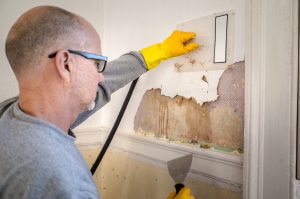
- Damp Proof Plastering Treatment: Standard gypsum plaster acts like a sponge when exposed to dampness and salts. Prokil replaces contaminated plaster with specialist, salt-resistant, breathable damp-proof rendering and plastering specifications that prevent residual dampness from spoiling future decorations.
Why Wood Rot And Bugs Spread Faster In Summer
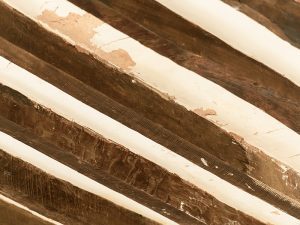
Timbers form the structural backbone of many commercial properties, particularly traditional brick-and-mortar office buildings, converted warehouses and heritage commercial premises. When water ingress meets structural timber in the presence of July heat, the clock starts ticking on structural stability.
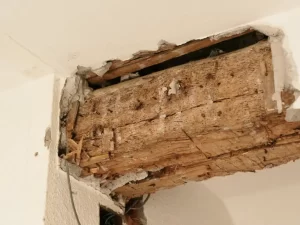
The Dry Rot (Serpula lacrymans) Explosion: Dry rot is uniquely destructive because it can transport its own moisture across brickwork and concrete to attack dry timber elsewhere in a building. While it needs around 30% moisture content to germinate, July’s warm ambient temperatures optimise the fungus’s metabolic rate. An outbreak that takes months to grow in winter can aggressively destroy an entire commercial sub-floor or ceiling void in a matter of weeks during a hot summer. Because dry rot remediation requires stripping out timber and treating surrounding masonry up to a metre past the infection, insurance claims are incredibly costly. Securing approval requires expert, meticulous documentation to prove the outbreak was an acute, secondary consequence of a sudden covered event (like a flash flood) rather than historical maintenance neglect.
Wet Rot & Woodworm Infestations: Unlike dry rot, wet rot stays confined to consistently saturated areas, usually caused by localised roof leaks or burst pipes. However, it rapidly compromises the load-bearing capacity of structural timbers and joists. Left unaddressed in warm summer weather, wet-rotted timber quickly becomes soft and structurally unviable. Furthermore, summer is the active flight season for the Common Furniture Beetle (Anobium punctatum). Emerging between May and September, adult beetles seek out fresh, damp timber cracks to lay eggs. July water ingress softens structural wood, making it highly attractive to wood-boring insects and accelerating infestation risks across commercial portfolios.
How Prokil Restores Commercial Timber
Remediating structural timber damage within an insurance claim framework demands specialised engineering and chemical application. Prokil’s commercial timber division operates under strict industry standards:
- Treating Rots and Fungi: We apply heavy-duty, professional-grade fluids to affected walls and timber frameworks to destroy any remaining spores and stop the rot from returning.
- Timber Repair: If beams or joists are no longer safe, our technicians repair or replace them using pre- treated timbers to make the building safe again.
- Woodworm Treatment: During the summer flying season, we apply insecticide sprays and professional grade gels to kill active woodworm larvae and protect the timber from future attacks.
Professional Surveys Matter For Insurance Claims
The success or failure of a commercial property insurance claim involving damp and timber damage hinges entirely on the quality of the diagnostic evidence submitted to the loss adjuster. Insurers look for any evidence that the claimed damage is a result of wear and tear, gradual deterioration or historical neglect, as these are standard policy exclusions.
| Claim Factor | Insurer’s Potential Objection | How Prokil’s Commercial Survey Safeguards the Claim |
| Root Cause Verification | The damp is a pre-existing maintenance issue, not caused by the storm. | We provide quantitative moisture metrics and moisture profiles proving an acute, recent water path. |
| Scope of Fungal Spread | Dry rot remediation costs are excessive and unproven. | We map the extent of the mycelium network, detailing precisely what structural elements must be cut out. |
| Mitigation of Loss | The landlord delayed action, allowing secondary damage to worsen. | Our rapid-response deployment provides an immediate emergency diagnostic report, showing proactive asset management. |
Operational Impacts And Remediation Pathways
To assist commercial portfolio managers in triaging summer property damage, the matrix below details the standard operational risks associated with secondary damp and timber decay, alongside the targeted Prokil B2B solutions required for insurance reinstatement.
| Primary Source | Secondary Asset Risk | Operational & Structural Impact | Prokil Commercial Treatment Specification |
| Flash Flood / Gutter Overflow | Penetrating Damp | Decorative spoiling, ruined office plasterboard, structural brickwork degradation. | Chemical damp proofing, structural tanking and specialised damp-proof plastering. |
| Trapped Storm Water + July Heat | Accelerated Dry Rot | Complete destruction of structural floor joists, roofing timber and lintels. Structural collapse risk. | Fungicidal masonry sterilisation, structural timber splicing and preservation treatments. |
| Localized Pipe Leak | Wet Rot | Softening of localised flooring, localised floor drop, damage to commercial fixtures. | Targeted timber replacement, structural drying and moisture source elimination. |
| High Humidity / Closed Void | Toxic Black Mould | Air quality degradation, statutory health & safety violations, tenant lease walkouts. | Industrial biocide decontamination, air purification and mechanical ventilation (PIV) installation. |
| Warm Weather Infestation | Active Woodworm | Weakening of support beams, structural floorboard disintegration over extended portfolios. | Deep-penetrating residual insecticidal spray treatments and timber structural reinforcing. |
Protect Your Property Portfolio With Prokil
Mid-summer is a critical operational window for commercial property preservation. While fine weather offers the perfect opportunity to address external building envelopes, the hidden internal threats of secondary damp, rapid dry rot expansion and toxic mould growth require continuous vigilance and immediate professional intervention when water ingress occurs. For asset managers, institutional landlords and insurance professionals, partnering with a dedicated, highly certified specialist is non-negotiable. Prokil does not offer superficial fixes; we provide comprehensive, scientifically validated diagnostic surveys and high-specification remediation treatments designed to withstand the rigorous scrutiny of commercial loss adjusters.
Don’t let a sudden July storm or an unmonitored summer leak compromise the structural integrity and financial performance of your commercial investments. Protect your assets, safeguard your tenants and validate your insurance claims by contacting Prokil’s commercial division today. Let our technical experts handle your damp, timber and ventilation challenges with the speed and precision your business demands.